


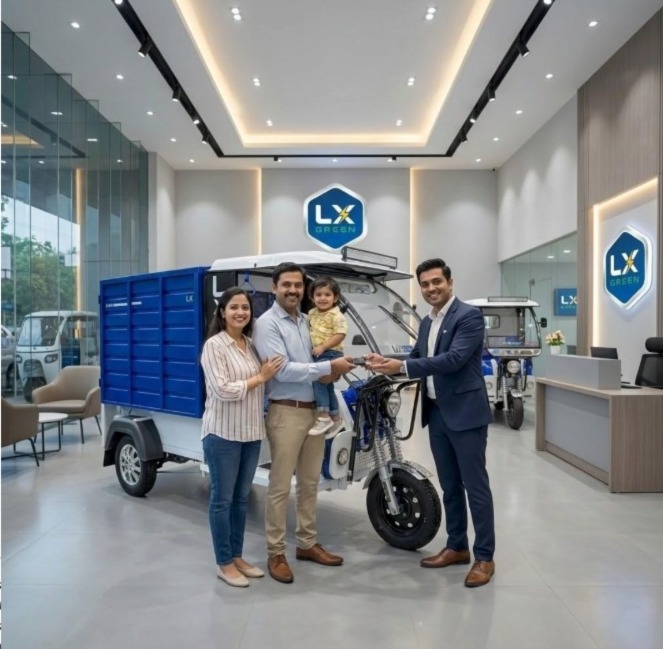
The narrative around Electric Vehicle (EV) dealerships has shifted dramatically. What began as a speculative bet on the future has transformed into a structured, profitable reality for those who have moved beyond the traditional “sales-only” mindset. As we approach 2026, the dealers seeing the highest return on investment (ROI) are not just moving metal—they are building ecosystems.
At Luxus Green Mobility (LX Green), we operate on the belief that the next phase of the revolution will be led by strong systems, ethical leadership, and profitable partnerships. The days of relying solely on new vehicle margins are fading; the most successful dealers are diversifying into service, infrastructure, and the used market.
Here is why forward-thinking EV dealers are finally profitable and how you can replicate that success.
- They Are Selling “Business Outcomes,” Not Just Vehicles
In the Indian market, particularly for electric three-wheelers (L3 and L5 categories), the buyer is often looking for livelihood, not just transportation. Successful dealers act as long-term ecosystem partners rather than just vendors.
At LX Green, we design business outcomes. This means dealers must provide:
- ROI Clarity: Helping drivers and fleet operators understand daily earnings versus low operating costs.
- Financing Solutions: Facilitating relationships with NBFCs and banks to lower partner risk.
- Operational Support: Offering structured dealership systems and training.
- Digital Marketing: Offering digital marketing services for lead generation, you don’t need to hire additionally for marketing. It’s all cover for you.
How You Can Too: Shift your mindset from “OEM” to “Partner.” Focus on vehicles engineered for ground realities—durability and economy—rather than just showroom aesthetics. Commercial fleets and e-commerce logistics are rapidly adopting EVs, creating bulk sales opportunities for dealers who can demonstrate clear economic advantages.
- They Are Mastering the Used EV Market
The “sacred cow” of the traditional dealership model—relying exclusively on new unit sales—is dying. With new vehicle margins under pressure, a massive opportunity has emerged in the used EV sector.
Expert analysis suggests that profitable dealers should invert their sales mix, targeting a ratio of 3-to-1 used-to-new vehicles. While low-end used EV pricing has softened, creating affordable entry points for new customers, newer used models are holding value. This strategy allows dealers to:
- Control the source of supply and purchase price.
- Capture the second lifecycle of the vehicle, attracting price-sensitive buyers.
- Create a secondary market for certified pre-owned EVs, a trend expected to grow significantly by 2025.
How You Can Too: Establish a rigorous inspection and certification process. Do not fear the trade-in; use it to capture the customer who isn’t ready for a brand-new price tag but needs reliable mobility.
- They Are Monetizing the “Infrastructure Gap”
Range anxiety and charging availability remain top concerns for buyers. However, profitable dealers have stopped viewing this as a hurdle and started viewing it as a recurring revenue stream.
The EV charging market in India is projected to cross $20 billion by 2030. By installing fast chargers and becoming a local charging hub, dealers can:
- Generate Recurring Revenue: Income is generated per unit of electricity consumed, providing cash flow even when vehicle sales are slow.
- Enhance Sales Pitches: A functioning charging ecosystem on the lot provides a physical anchor for sales staff to demonstrate ease of use to skeptical customers.
- Utilize Incentives: Government schemes and subsidies (such as FAME III and state-level grants) can significantly offset the cost of installing charging infrastructure,.
How You Can Too: Partner with Charge Point Operators (CPOs) or manufacturers like Celectric Mobility to install AC and DC chargers. Treat energy as a product you sell alongside the vehicle.
- They Have Adapted Service to the Electric Reality
A common myth is that EVs will kill dealership service revenue because they have fewer moving parts. In reality, service revenue is growing for dealers who adapt—70% of dealers reported growth in service revenues in 2024.
While EVs do not need oil changes, they require specialized care that independent mechanics cannot yet provide. This includes:
- High-Value Maintenance: Tires, cabin technology, and battery cooling systems require regular attention.
- Software and Electronics: As vehicles become software-driven, dealers must provide updates and remote diagnostics.
- Longer Retention: Because EV warranties are often longer (3–5 years for batteries), customers stay tethered to the dealership for specialized service longer than they would for internal combustion vehicles.
How You Can Too: Invest in technician training for high-voltage systems. Position your service center as a “Battery Health Specialist” to build trust and capture post-warranty work.
Conclusion: The Road Ahead
The future of EV dealerships is bright, with markets expanding into Tier-2 and Tier-3 cities and government policies driving affordability. However, success requires moving beyond the “box mover” model. It requires building a trustworthy ecosystem—one that ensures profitability for the driver, reliability for the financier, and sustainability for the planet.
At Luxus Green Mobility, we don’t just manufacture vehicles; we build ecosystems. With a production capacity exceeding 1000+ units per month and a focus on “New India’s New Trust” (Naye Bharat Ka Naya Bharosa), we are ready to partner with dealers who want to build a sustainable, profitable future.
📞 Call: 1800 891 2688
🌐 Visit: www.luxusgreen.com
🏭 Manufacturing: Bilaspur (Chhattisgarh) | Faridabad (Haryana)

